Why Men Avoid Therapy (and How MENd Is Different)
Most men don't avoid therapy because they don't need it, they avoid it because of how it's usually framed. Here's what keeps men away, and what a space built specifically around men actually looks like.
Published
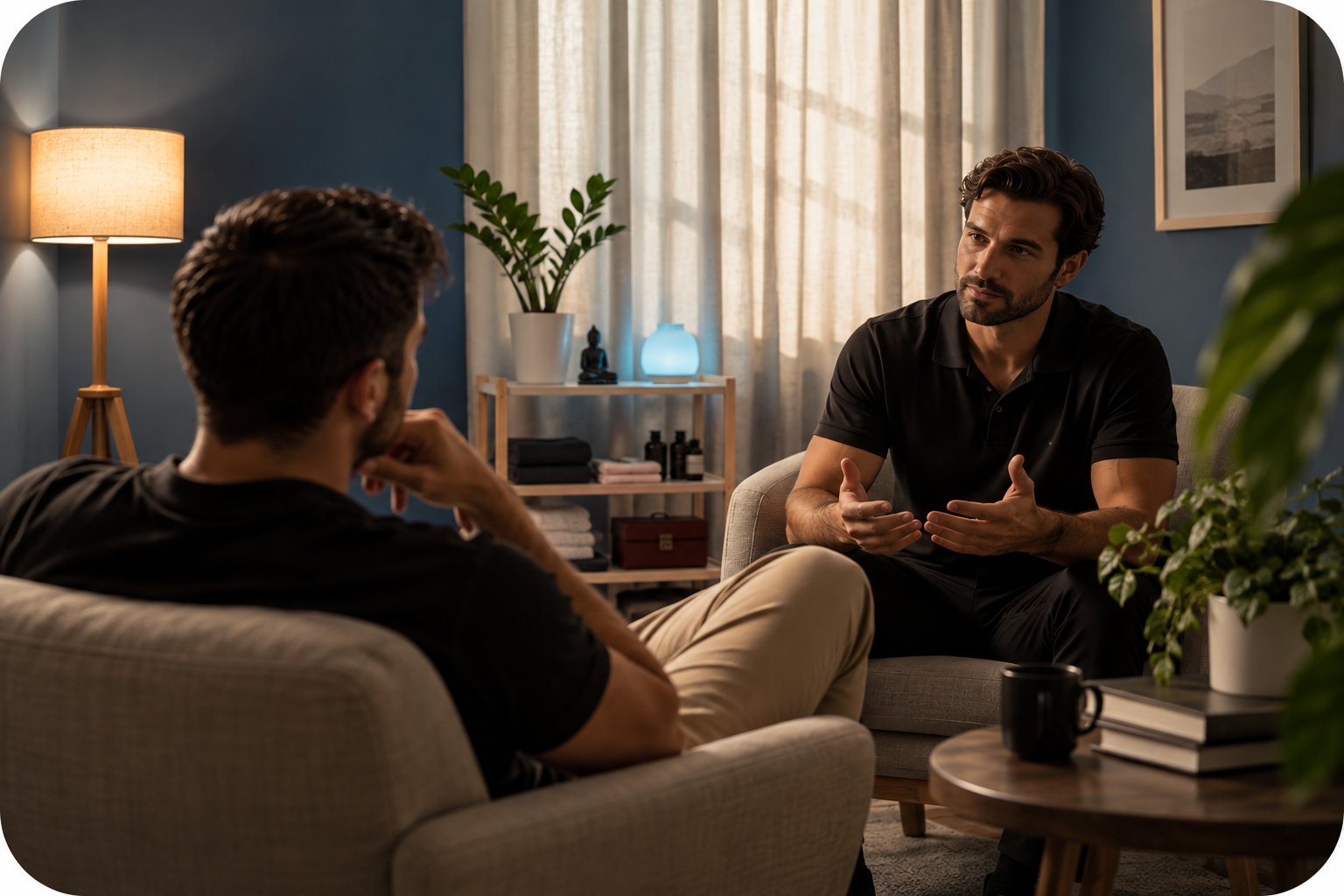
Men are statistically less likely to seek therapy than women, and it's rarely because they're carrying less, it's usually because the way therapy gets presented doesn't feel built for them. Understanding what actually keeps men away is the first step to building something different.
It's Rarely About Not Having Anything to Say
The idea that men avoid therapy because they don't have much going on internally doesn't hold up. More often, it's about not having a space that feels safe to say it in, one that won't respond with easy reassurance or a rush to fix things before he's finished talking.
The Fear of Being Seen as Weak
Even when men want support, the fear of appearing weak, to a partner, a boss, or themselves, keeps a lot of them from ever booking that first session. That fear isn't irrational, it's shaped by decades of cultural messaging, but it doesn't have to be the final word.
Generic Therapy Doesn't Always Fit
A lot of therapy is built around a general audience, and that's not always wrong, but it can leave specific experiences, particularly around masculinity, identity, and how men are taught to carry difficulty, underserved or unaddressed.
What a Men-Focused Space Actually Looks Like
Individual Therapy, Couples and Family Therapy, LGBTQIA+ Affirming Care, and Trauma-Informed Therapy at The MENd Method Studio are built specifically around men, with Dr. Liam bringing lived experience and trauma-informed training to every session. It's private, judgment-free, and paced entirely around what you're ready to bring into the room.